
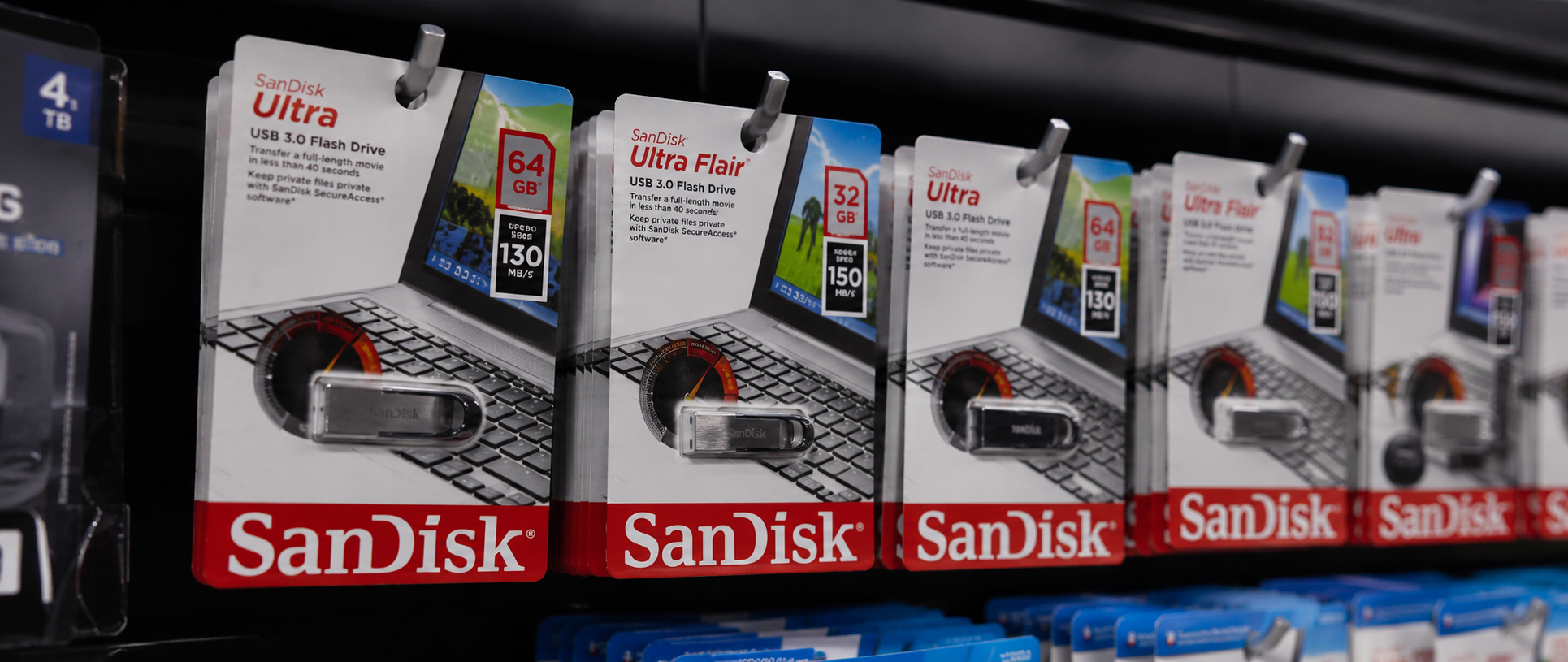
SanDisk (SNDK) shares are inching lower in extended hours on Wednesday even though the flash memory products specialist delivered a massive top and bottom-line beat.
The multinational more than quadrupled revenue to $8.97 billion in its fiscal Q4, on a remarkable $39.25 a share of earnings (EPS).
The quarterly print is adding to pressure on SanDisk stock that’s already lost some 45% since late June.
What’s driving SanDisk stock lower after Q2 earnings?
Investors are responding mostly to SanDisk’s revenue guidance that came in shy of Street estimates.
While management sees adjusted per-share earnings to print at $45 in the current quarter – beating the consensus by 28 cents – it expects revenue in the range of $10.3 billion to $10.8 billion, well below the $10.82 billion that analysts had called for.
Much of it was because SNDK signed five additional New Business Model (NBM) agreements in Q4 – expanding long-term structured supply contracts with hyperscalers.
While these agreements provide long-term gross margin stability and pricing visibility, they can alter quarterly revenue recognition dynamics and short-term delivery pacing compared to spot-market sales.
For SNDK shares, which had soared over 30% into the earnings release, any topline weakness– even just $270 million at the midpoint – was bound to trigger aggressive profit-taking.
Should you buy the dip in SNDK shares?
Long-term investors should nonetheless ignore the near-term noise and consider buying the dip in SanDisk shares, particularly because the company’s board expanded the buyback authorization by $14 billion.
This brings the total remaining repurchase capacity to a whopping $15.5 billion.
The announcement is largely positive for SNDK as it signals management’s conviction that shares are significantly undervalued at current levels.
By shrinking the share count at a lower valuation, stock repurchase initiatives directly “accelerate” long-term EPS growth and create an institutional price floor against short-term sell-offs.
That said, SanDisk remains decisively below its major moving averages (MAs) – indicating bears remain in control across multiple timeframes.
What’s the consensus rating on SanDisk?
While technical chart weakness and guidance-induced profit-taking may keep SNDK stock volatile in the near term, the company’s secular narrative remains firmly intact.
The relentless build-out of enterprise AI infrastructure requires massive, high-density flash storage that’s shifting hyperscalers toward structured commitments – transforming SanDisk from a volatile memory supplier into an essential artificial intelligence partner.
With a huge capital return program set to accelerate earnings growth, this post-earnings weakness offers an attractive entry for long-term investors willing to look past near-term noise and bet on continued enterprise SSD expansion.
What’s also worth mentioning is that Wall Street remains bullish as ever on SanDisk for the next 12 months.
According to Barchart, the consensus rating on SNDK sits at “Strong Buy”, with the mean price target of $2,342 indicating massive upside potential from here.
The post Why is SanDisk stock slipping despite massive Q2 beat? appeared first on Invezz