
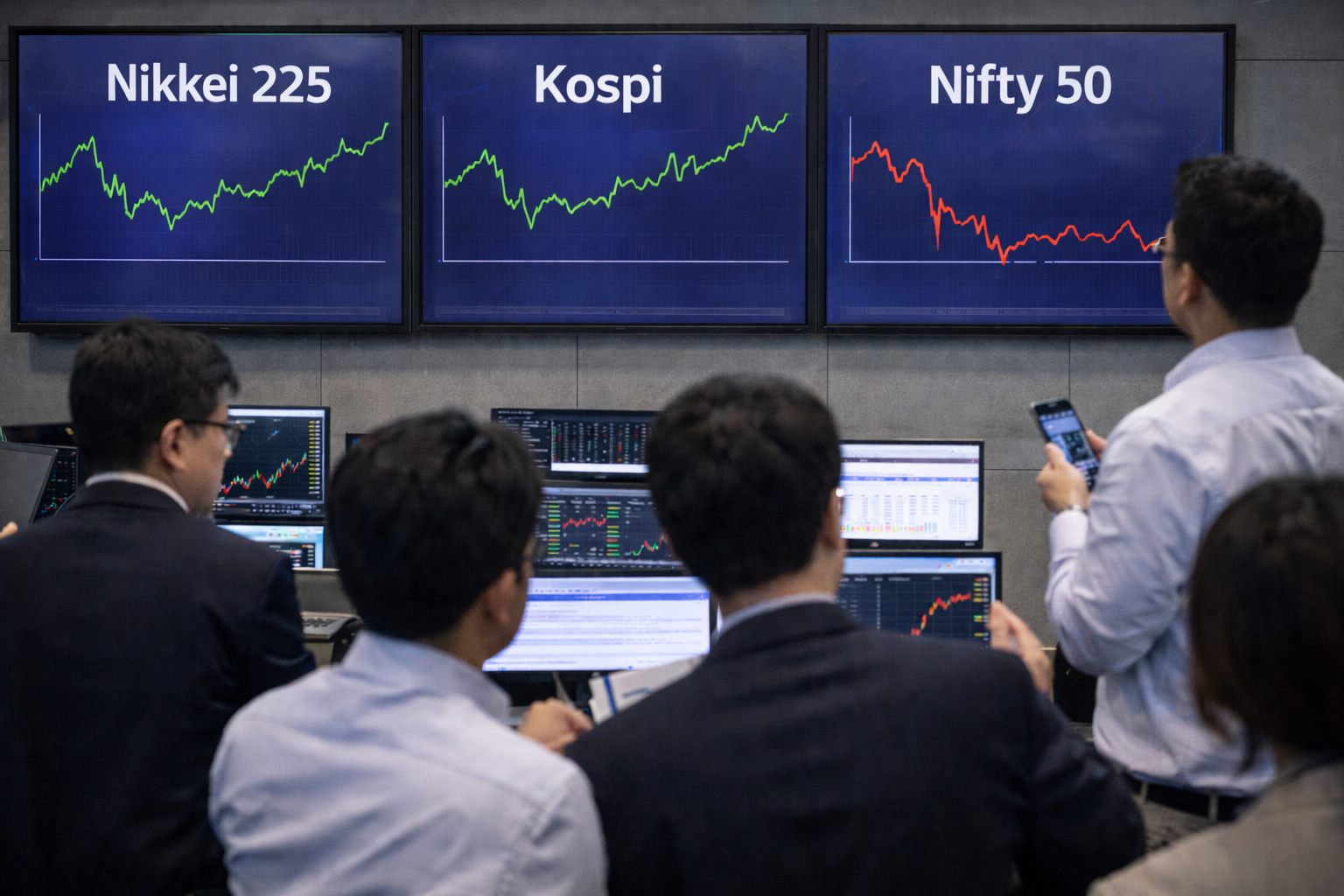
The KOSPI edged higher on Wednesday as gains in Samsung Electronics and SK Hynix helped South Korean shares stabilise after four straight declines, even as foreign investors continued to pull money from the market ahead of the Federal Reserve’s rate decision.
The benchmark opened 0.24% lower before reversing course and was up 0.2% at 6,640.47 by 11:20 am in Seoul.
Samsung gained 0.6% and SK Hynix climbed 1.45%, giving the technology-heavy market support after a difficult stretch for global semiconductor shares.
Chip rebound gives the KOSPI a floor
The recovery in Korea’s two largest chipmakers is important because the KOSPI has spent recent sessions absorbing pressure from higher US borrowing costs, oil above $100 and renewed doubts over the pace of AI investment.
Kiwoom Securities analyst Han Ji-young told BusinessKorea that the 6,600 area was emerging as an important short-term support level.
In his view, a sustained rebound will require greater stability in the won and clearer evidence that US interest rates are close to a peak.
LG Energy Solution also advanced 0.68% and POSCO International rose 2.55%.
Hyundai Motor dropped 2.04%, while Korean Air fell 1.7%, showing that the recovery remained concentrated rather than broad-based.
Foreign selling remains the weak point
The bigger warning sign is capital flow.
Foreign investors sold a net 922.8 billion won of KOSPI shares by late morning, extending their selling streak to a sixth session. Institutions bought about 389 billion won, helping absorb some of that pressure.
The won weakened to about 1,369.75 per dollar.
OCBC strategist Christopher Wong told The Wall Street Journal that elevated US Treasury yields, expensive oil and cautious risk sentiment were putting Asian currencies under pressure, with the Korean won particularly sensitive to changes in equity flows.
That makes Wednesday’s KOSPI move more fragile than the headline gain suggests.
Strong chip shares are supporting the index, but foreign positioning still reflects concern about Korea’s exposure to global rates, energy imports and technology sentiment.
Fed decision keeps Asia in a holding pattern
Elsewhere in Asia, markets were mixed before the Fed announcement.
The MSCI Asia-Pacific index excluding Japan hovered around flat to slightly higher, supported by Taiwanese shares even as Chinese equities weakened. The CSI 300 slipped about 0.35%.
Japan’s Nikkei 225 fell about 0.2%, dragged lower by SoftBank Group and Kioxia, while the broader Topix gained 0.5%. S&P 500 futures edged higher.
The US 10-year Treasury yield eased back towards 5% after breaching that level on Tuesday, while markets placed roughly a 95% probability on a quarter-point Fed increase.
Brent crude meanwhile slipped below $108 after Tuesday’s surge but remained historically elevated as Middle East supply disruptions persisted.
The post KOSPI turns higher as chips rebound, but foreign selling tells another story appeared first on Invezz