
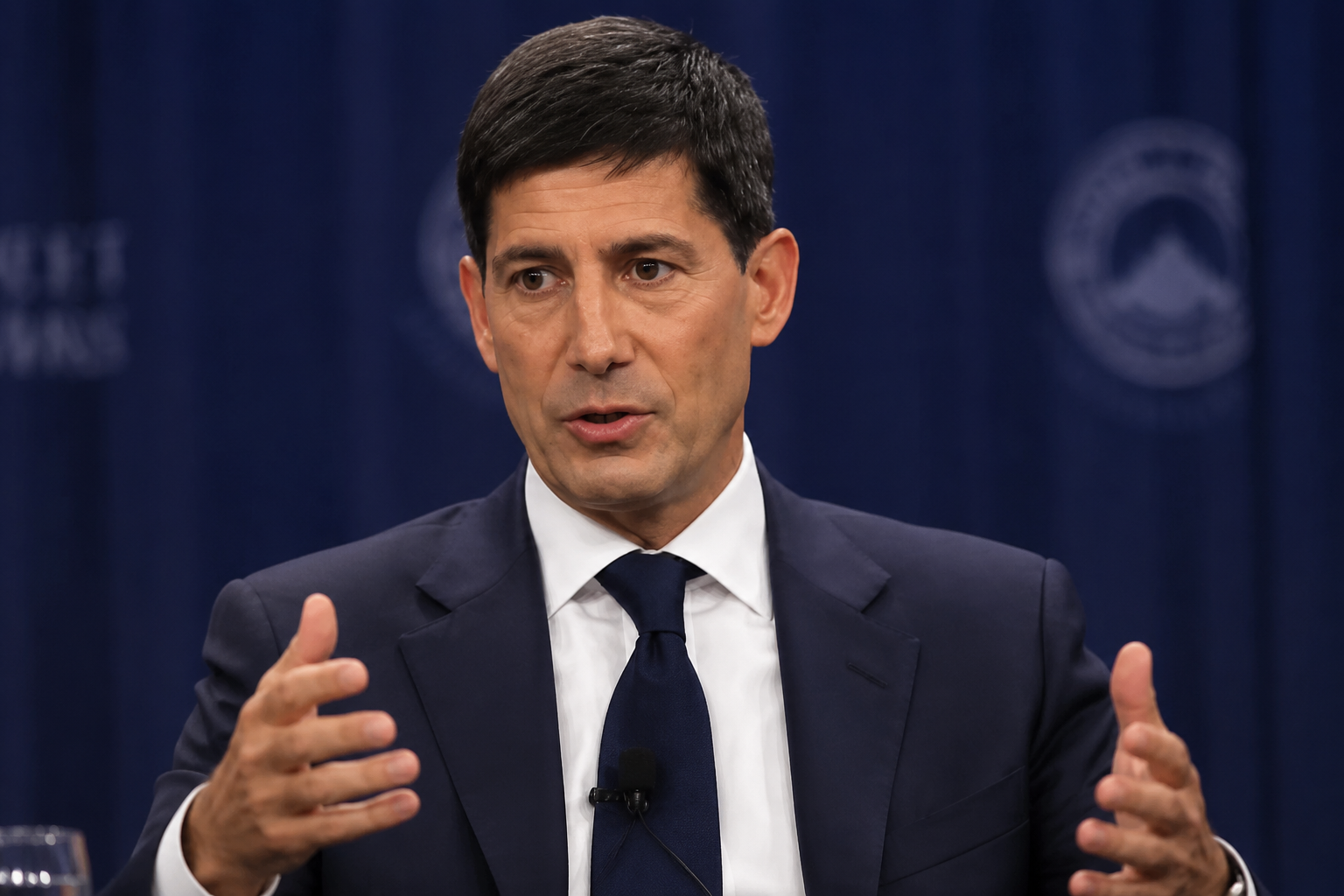
Federal Reserve Chair Kevin Warsh warned at Jackson Hole that inflation has not meaningfully slowed and said policymakers would have “work to do” if price pressures do not move toward the 2% target.
Bitcoin fell below $80,000 as higher short-term Treasury yields weighed on risk-sensitive assets following Warsh’s remarks.
Gold prices dropped nearly 3% as traders increased bets on a September rate hike and the dollar strengthened.
Oil prices also declined, with Brent and WTI on track for weekly losses as traders monitored US monetary policy and the potential reopening of the Strait of Hormuz.
Kevin Warsh warns more action needed against inflation
Warsh’s first major address as Federal Reserve chairman provided more detail on his views of inflation and monetary policy, although he stopped short of signaling whether he would support a rate increase at the Fed’s September meeting.
Warsh reiterated that the central bank remains committed to its 2% inflation target, describing it as a “firm and fixed target.” He said recent PCE and CPI readings had been better than expected but had not demonstrated a meaningful improvement in underlying inflation trends.
“Here is my standard: We must be confident that underlying inflation is moving to our objective, clearly and at sufficient speed. Otherwise, we have work to do,” Warsh said.
He also said financial conditions were not currently restrictive and described interest rates as the Fed’s “predominant tool” for achieving its mandate. However, he emphasized that he was committed to a policy discipline rather than a predetermined decision on rates.
Markets responded by increasing expectations for a September hike. The implied probability rose above 50%, from around 36% before the speech, according to federal funds futures.
The Fed is due to receive August consumer price data on September 11, shortly before its September 15-16 policy meeting.
Bitcoin falls below $80,000
Bitcoin slipped below $80,000 after Warsh’s comments pushed short-term Treasury yields higher and reduced some of the recent risk appetite across financial markets.
The cryptocurrency fell as much as 3.2% to $77,427, according to CoinGecko data.
The move left Bitcoin well below its record high of about $126,000 reached last October, although it remained above levels seen earlier in August.
Wintermute OTC trader Jasper De Maere described the market reaction as relatively contained, saying the speech represented a “slight hawkish tilt” but was broadly in line with expectations.
Crypto investors are also watching longer-term technical indicators. Galaxy Digital said that in four of the five completed crypto bear markets, the market bottom was definitively established after the 50-week moving average was first broken to the upside.
Meanwhile, $6.4 billion in Bitcoin options were set to expire on Deribit, potentially creating additional volatility as market makers adjust their positions.
Gold prices fall as rate-hike bets rise
Gold prices declined nearly 3% on Friday as traders raised expectations for a September rate increase following Warsh’s remarks.
Spot gold fell 3.13% to $4,457.17 an ounce, while US gold futures for December delivery settled 3.35% lower at $4,529.90.
Gold was also down 2.9% for the week after reaching a record-related high of $4,696.18 on Tuesday.
Gold typically comes under pressure when interest rates rise because the metal does not generate a yield. A stronger dollar also made gold more expensive for buyers using other currencies.
Silver fell 3.5%, while platinum declined 0.6%. Palladium moved in the opposite direction, gaining 5.3%.
Oil prices track weekly decline
Oil prices also moved lower as traders weighed the implications of a potentially more hawkish Federal Reserve against developments surrounding the Strait of Hormuz.
Brent crude fell 0.37% to $89.37 a barrel, while West Texas Intermediate declined 0.18% to $83.38.
Both benchmarks were headed for weekly declines, with Brent down about 5.38% and WTI off 4.47%.
Price Futures Group senior analyst Phil Flynn said Warsh’s comments pointing to a possible rate hike contributed to the decline.
At the same time, traders monitored efforts to restore shipping through the Strait of Hormuz, through which about 20% of global oil production flowed before the war.
Seven commodity vessels transited the strait on Thursday, below the 10-day average of 15.
Goldman Sachs estimated recent Gulf oil exports at 15 million to 16 million barrels per day, still below pre-war levels but above the lowest point reached in March.
Separately, US officials are working on a deal for long-term access to part of Venezuela’s crude reserves, while Venezuela is reportedly considering leaving OPEC.
The post Evening digest: Warsh signals inflation fight, gold and oil slide appeared first on Invezz