
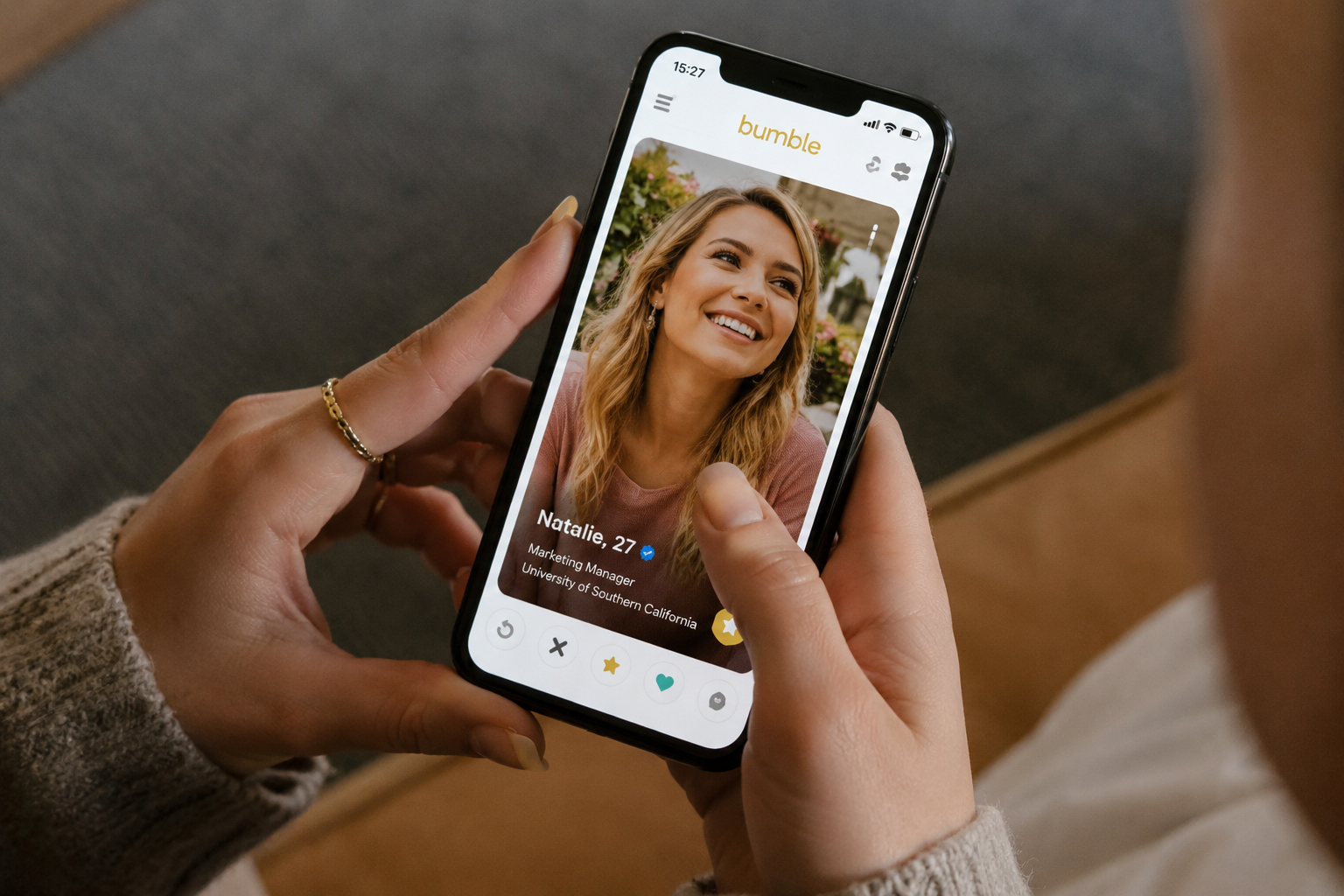
Bumble is overhauling one of its most recognisable features by allowing either person in a match to send the first message, marking a major change to the dating app’s women-first approach as it seeks to revive user engagement amid slowing growth.
The company announced on Tuesday that it is removing the women-first messaging requirement that has defined the platform since its launch in 2014.
Bumble will also extend the time users have to respond to a match from 24 hours to 72 hours, giving members more flexibility and reducing the pressure to reply immediately.
Investors welcomed the announcement, with Bumble BMBL shares rising 5% on Tuesday.
Despite the gain, the stock remains down about 22% this year and has lost more than 55% of its value over the past 12 months.
Platform shifts with changing user preferences
Bumble built its reputation by requiring women to initiate conversations in heterosexual matches, positioning itself as an alternative to traditional dating apps where unsolicited messages were often a concern.
The latest changes represent a significant strategic shift as online dating companies face slowing user growth and increasing fatigue with swipe-based platforms.
Companies including Bumble and Match Group, the owner of Tinder, have increasingly introduced artificial intelligence-powered features and product updates in an effort to improve engagement and encourage users to remain active.
According to Bumble, pilot programmes in Canada delivered encouraging results.
The company said the new messaging format led to higher rates of chat initiation, fewer conversations expiring before they began and a larger number of mutual exchanges between matched users.
Management defends move; survey shows women prefer men to send first message
Founder and Chief Executive Whitney Wolfe Herd said the update reflects changing user expectations rather than a departure from Bumble’s original purpose.
“While women making the first move was a radical idea, being women-first was never about prescribing just one way to connect. It was about designing an experience with women’s needs in mind to create better outcomes for everyone,” Herd said in a statement.
She added that users are seeking “more flexibility, less pressure, and more opportunities to create real, meaningful connections,” describing the latest update as an evolution of the company’s founding vision.
Bumble’s survey found that 66% of women preferred men to send the first message, with many respondents saying it reduced the stress associated with online dating.
More than half of surveyed members also said the longer response window improved their experience.
Growth pressures remain
The product changes come shortly after Bumble projected third-quarter revenue below Wall Street expectations and reported a decline in paying users.
The company expects third-quarter revenue of between $205 million and $213 million, below analysts’ average estimate of $215.1 million, according to LSEG data.
For the second quarter, revenue fell 15.2% from a year earlier to $210.5 million, broadly matching analyst expectations.
Total paying users declined 16.4% to 3.2 million, although average revenue per paying user increased 1.2% to $21.96.
Last week, Goldman Sachs analyst Eric Sheridan slashed the price target on the stock to $3.50 from $5, keeping a neutral rating on the shares.
The stock currently trades at levels of $2.88.
Bumble’s challenges mirror those facing the wider online dating industry.
Match Group also issued third-quarter revenue guidance below Wall Street estimates on Tuesday, underscoring the broader slowdown across the sector as companies look for new ways to retain users and stimulate growth.
The post Bumble stock rises after ending women-first texting rule: will the move boost growth? appeared first on Invezz