
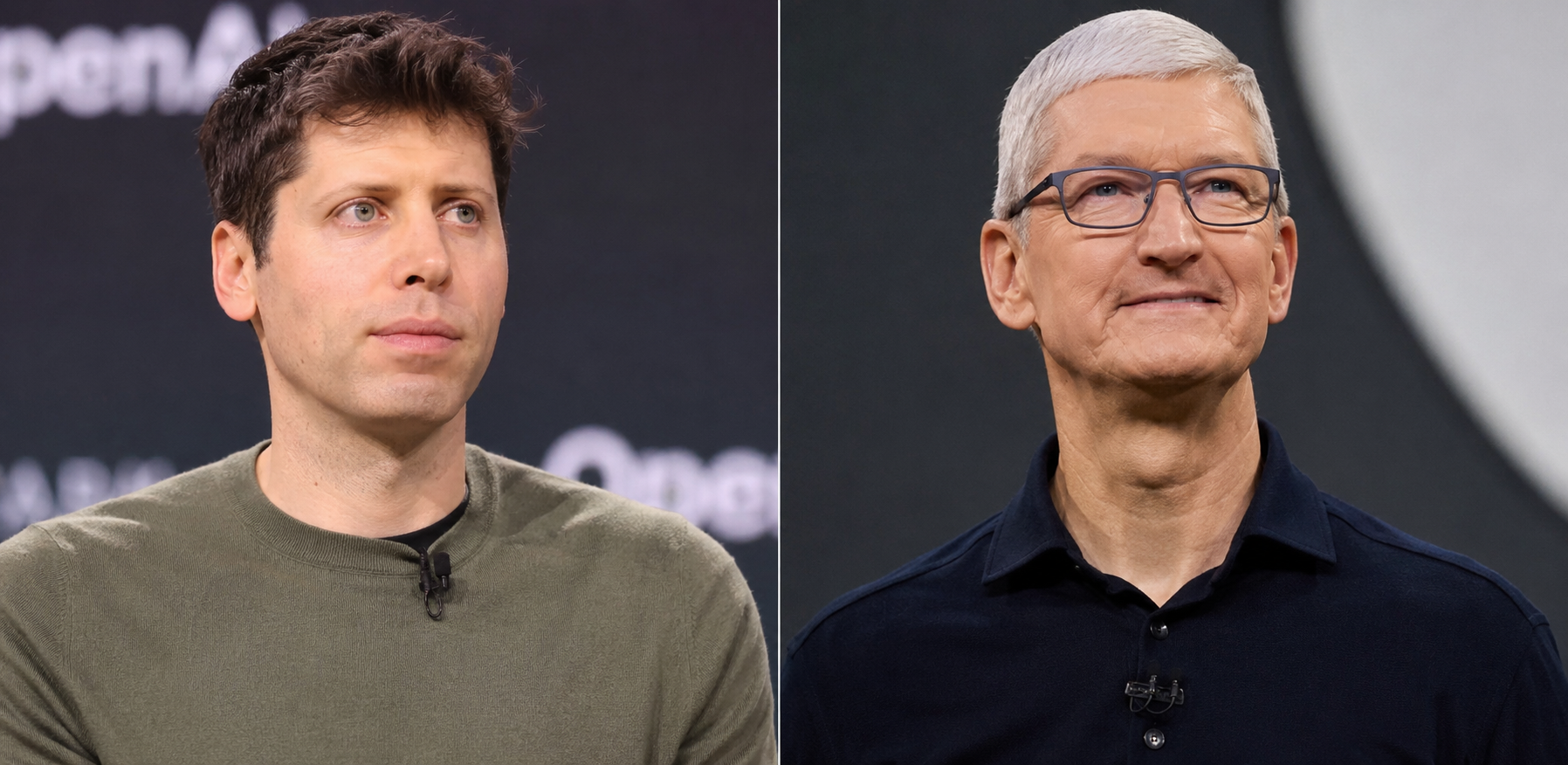
The rift between Apple and OpenAI, triggered by a lawsuit filed by the iPhone maker accusing the artificial intelligence company of trying to acquire Apple’s trade secrets to advance its AI hardware ambitions, has entered a new phase.
Apple on Monday asked a US judge for a preliminary injunction barring OpenAI and two former employees from accessing, acquiring, using or disclosing alleged confidential information as it moves ahead with the trade secrets case.
The request comes just weeks after Apple sued OpenAI, alleging that individuals employed by the company wrongfully obtained Apple’s secret and confidential information regarding unreleased technologies, internal processes and future products.
According to the complaint, Apple believes the alleged conduct threatens irreparable harm as OpenAI accelerates efforts to build dedicated AI hardware.
“Apple will be irreparably harmed absent a preliminary injunction,” the company said in its filing.
Apple alleges coordinated effort to obtain confidential information
Central to Apple’s lawsuit are allegations involving Tang Tan, OpenAI’s chief hardware officer and a former Apple vice president who previously oversaw product design for the iPhone and Apple Watch.
Apple alleged that Tan directed Apple employees interviewing with OpenAI to disclose confidential information while they were still employed by the company.
According to the complaint, Tan instructed candidates to bring “‘actual parts’ from Apple to their interviews for ‘show and tell’ sessions in which he and his team at OpenAI can elicit still more Apple confidential information,” Apple alleged.
The lawsuit also names former Apple senior system electrical engineer Chang Liu.
Apple alleges Liu stole an Apple laptop before joining OpenAI and maintained an ongoing relationship with an Apple employee who continued sharing internal information.
More significantly, Apple claims Liu obtained knowledge of a software flaw that allowed him continued access to Apple’s internal file servers after leaving the company.
Apple said it first raised concerns with OpenAI in February by writing to the company about what it believed was misuse of confidential information.
According to the complaint, OpenAI never responded.
OpenAI publicly disputes Apple’s claims
Rather than responding only through the courts, OpenAI has mounted a public defence, publishing a detailed blog post challenging several of Apple’s allegations.
“Apple is one of the greatest companies of all time, and built a reputation for obsessing over the smallest details. This careless, aggressive and oddly personal lawsuit sadly doesn’t live up to that reputation,” the company said.
OpenAI sought to rebut Apple’s claim that it ignored concerns raised before the lawsuit.
It published what it said were copies of email correspondence showing Apple’s outside counsel mistakenly sent OpenAI’s general counsel a follow-up that had actually been intended for a former Apple employee.
“Apple had claimed that they contacted OpenAI in February and that we didn’t respond,” OpenAI wrote in its blog post.
“They now admit that their outside lawyers emailed the wrong person after confusing two Asian last names—only after we brought this to their attention.”
OpenAI also said, “Apple also claimed they had a discussion with our General Counsel, which they now concede never happened.”
The AI company similarly rejected Apple’s allegations surrounding Chang Liu’s continued access to company information after leaving.
According to OpenAI, Apple now concedes that Apple employees reached out to Liu rather than Liu initiating those conversations.
OpenAI published what it described as messages between Liu and former Apple colleagues showing Apple employees asking him to help locate files and answer technical questions after his departure on January 22.
“Apple now tries to shift the blame to ‘residual access’, but they also don’t disclose that this is a common issue with Apple which is caused by them failing to properly manage system access when people leave. What that means in practice is that former employees who are trying to do the right thing when they leave still have access to Apple files—despite not wanting them or even being aware of them,” OpenAI said.
The company also defended Tang Tan’s conduct.
“Tan has always been clear with the team that we do not want, and must not use, any confidential information from other companies,” it said.
OpenAI further argued that Apple should have engaged with it before initiating legal action.
“We wish Apple had raised these issues with us before they filed their lawsuit and would have been happy to clarify all of this with them. We have taken the allegations in the lawsuit seriously and offered to work with Apple to resolve this. Instead, they’re trying to change their narrative, including by making vague accusations about other former employees, and will likely keep repeating this tactic,” it said.
The company added that “Apple’s request for a preliminary injunction is both based on false information and completely unnecessary because we do not have, nor want, any of their trade secrets. We’re much more interested in building innovative products and technologies that push the frontier.”
Apple seeks expedited discovery
Alongside the injunction request, Apple filed a concurrent motion seeking expedited discovery, including production of documents relating to the defendants’ alleged access to Apple’s proprietary and trade secret information.
The company asked the court to order Chang Liu and Tang Yew Tan to sit for depositions, along with OpenAI employee Yu-Ting Peng and an unnamed OpenAI employee who previously worked at Apple.
Apple also sought depositions from corporate representatives of OpenAI and io Products, OpenAI’s commercial arm, which is listed as a defendant in the lawsuit.
The motions indicate Apple wants to quickly gather evidence before OpenAI’s hardware ambitions advance further.
AI hardware has become the next battleground
The dispute comes as competition in artificial intelligence evolves beyond software and foundation models.
While AI companies initially competed by building increasingly powerful language models, the industry’s focus is now shifting toward dedicated AI devices capable of reducing dependence on smartphones.
OpenAI’s acquisition of Jony Ive’s startup last year signalled its ambitions to build entirely new categories of AI hardware.
That evolution places the company on a potential collision course with Apple, whose business remains centred around the iPhone and its broader hardware ecosystem.
“Apple sees OpenAI moving from partner to potential rival, while OpenAI is trying to reduce its dependence on the iPhone and build a direct relationship with consumers,” PP Foresight analyst Paolo Pescatore told Reuters in a report last month.
“Even if the allegations are not proven, the lawsuit could delay OpenAI’s hardware ambitions and further weaken what is already becoming an increasingly fragile partnership.”
As the legal battle expands from allegations of trade secret theft to requests for court-ordered injunctions and expedited discovery, the case is increasingly becoming a proxy for the broader fight over who will define the next generation of AI-powered consumer devices.
The post Apple escalates OpenAI lawsuit as emails expose bitter trade secrets fight appeared first on Invezz