
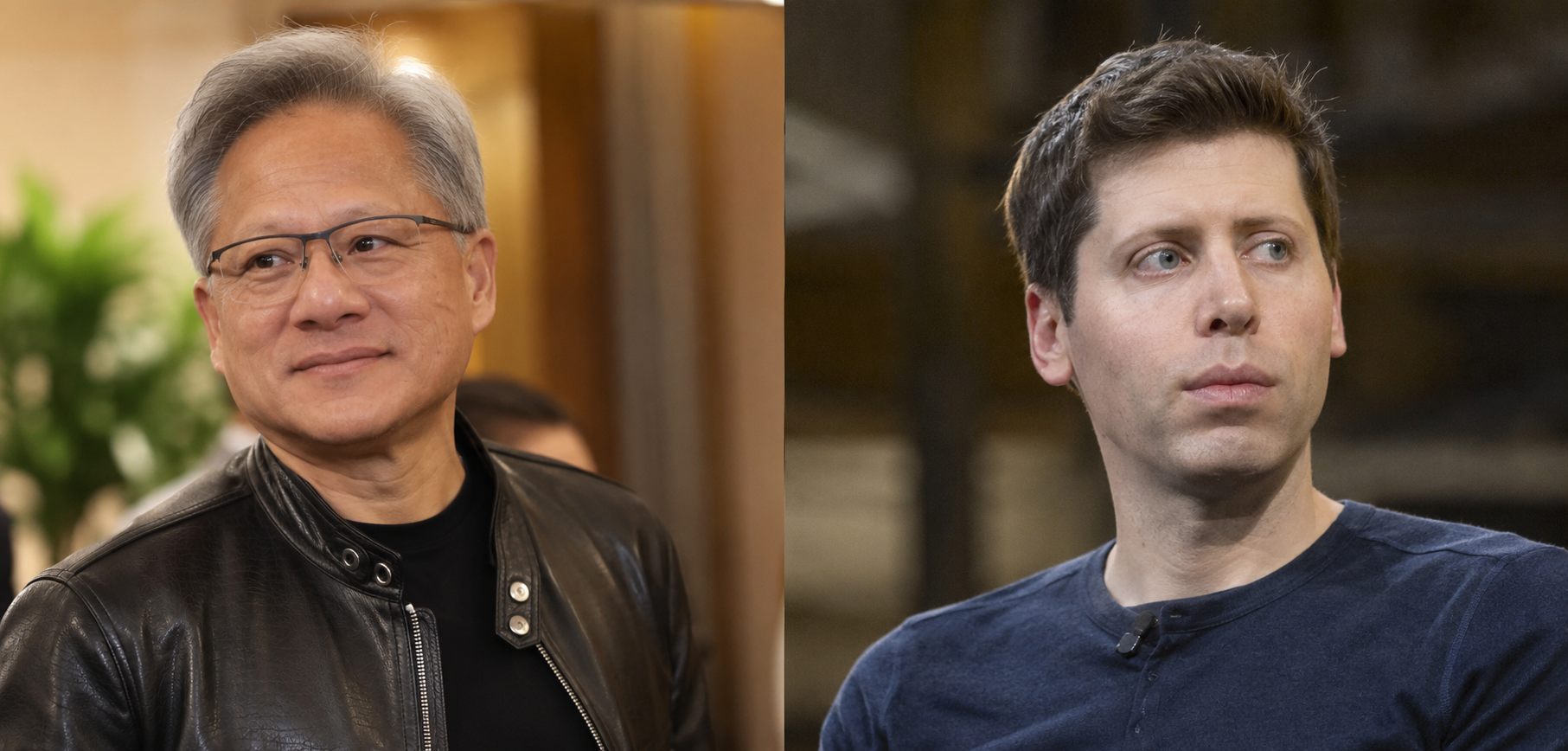
Nvidia is in talks to provide roughly $250 billion in financing guarantees for OpenAI as part of one of the largest artificial intelligence infrastructure projects ever planned, according to a Wall Street Journal report.
While analysts see the move as reinforcing confidence that the AI infrastructure boom has years to run, they also say it is likely to fuel debate over whether the sector’s extraordinary spending is increasingly being driven by creative financing rather than customer balance sheets.
The proposed financing support would help OpenAI secure a lease for a 10-gigawatt data centre project being developed by SoftBank subsidiary SB Energy in southern Ohio.
The facility is expected to cost more than $500 billion, including the computing hardware required to operate it.
OpenAI seeks greater control over computing infrastructure
For OpenAI, the project represents an opportunity to build dedicated computing infrastructure instead of relying primarily on cloud services provided by Microsoft, Amazon and Oracle.
The ChatGPT developer has rapidly expanded its computing needs as demand for generative AI services continues to grow.
However, despite being valued at approximately $852 billion, OpenAI remains unprofitable, raising questions over how it will finance the enormous infrastructure commitments required to support future AI development.
According to the report, Nvidia’s proposed $250 billion guarantee would cover the lease for the Ohio facility as well as associated debt financing.
The guarantee would not include Nvidia chips installed inside the data centre.
The Journal also reported that Nvidia is separately discussing financing OpenAI’s purchases of AI chips worth up to $350 billion.
The financing support would provide reassurance to lenders involved in the project by backing funding vehicles created to finance the massive development.
The first phase of the Ohio facility is expected to become operational in 2028 with around 800 megawatts of power capacity.
Ohio project could become one of the world’s largest
The southern Ohio campus is expected to become one of the world’s largest AI data centres once completed.
The Information previously reported that the development would be built across federal and privately owned land.
Power for the project will reportedly come from infrastructure controlled by the US government and financed separately through Japan under a recent bilateral trade agreement tied to Tokyo’s commitment to invest $33 billion in a natural gas power plant.
US Commerce Secretary Howard Lutnick is said to be involved in determining access to the project’s electricity supply.
OpenAI is reportedly among the most advanced bidders for the site, although Anthropic, Microsoft and Google have also held discussions regarding the facility.
Move eases concerns of demand fading; neoclouds could gain
For Nvidia, the financing discussions would serve another strategic purpose by helping guarantee long-term demand for its AI processors.
The company already dominates the market for graphics processing units used to train and operate advanced AI models.
Supporting financing for massive computing projects could further strengthen that position by ensuring customers continue expanding their infrastructure.
Bloomberg Intelligence analyst Anurag Rana said the reported discussions suggest Nvidia remains confident that demand for AI computing capacity will continue growing.
“Nvidia’s talks to provide a roughly $250 billion financing backstop for an OpenAI data-center lease, as reported by The Wall Street Journal, look constructive for CoreWeave, Crusoe Energy and other neoclouds,” Rana said.
“The structure suggests Nvidia is prepared to support larger AI infrastructure build-outs, easing concern that capacity demand is fading or that funding markets won’t absorb the next wave of projects.”
AI infrastructure spending continues to accelerate
The reported discussions come as major technology companies continue committing unprecedented amounts of capital to AI infrastructure.
Industry-wide spending on AI data centres, chips and related infrastructure is expected to exceed $700 billion this year as companies race to secure computing capacity.
Earlier this month, Alphabet raised its own capital expenditure guidance for 2026, while Microsoft, Amazon and Meta are also expected to announce further increases in AI-related spending during the current earnings season.
The growing investment wave has prompted concerns among some investors about how much of the industry’s spending is being supported through increasingly sophisticated financing arrangements rather than operating cash flow alone.
Analysts remain optimistic despite financing concerns
BofA Securities reiterated its Buy rating on Nvidia with a $350 price target following reports of the OpenAI discussions.
The brokerage said Nvidia’s strategy of supporting both proprietary AI developers such as OpenAI and open-source AI initiatives broadens the long-term market for its processors.
According to BofA, OpenAI remains one of the largest consumers of AI computing infrastructure, while open-source models encourage adoption among enterprises, sovereign AI initiatives and start-ups.
The firm said this combination should continue driving demand for Nvidia’s chips.
However, it also acknowledged that investors may increasingly question how much AI infrastructure spending is being supported by financing arrangements.
Frontier AI laboratories account for roughly 20% of Nvidia’s data centre revenue, according to BofA, with the remaining sales generated from a much broader customer base.
The brokerage said sceptics argue that financing-assisted demand could compress valuation multiples, pointing to Nvidia’s forward price-to-earnings multiple below 20 times and a price/earnings-to-growth ratio of roughly 0.5.
Supporters, however, contend that improved access to financing, electricity and infrastructure simply extends the AI investment cycle beyond what customers could fund independently.
Earnings season expected to test AI investment thesis
Some prominent investors have questioned the growing web of financial relationships connecting Nvidia, OpenAI, CoreWeave and other AI infrastructure providers.
Investor Michael Burry and technology commentator Ed Zitron both raised concerns over the weekend that such arrangements resemble interconnected financing structures that could attract greater scrutiny.
Rana believes the next major test will come as more technology companies report quarterly results.
“Alphabet’s capex increase last week pointed to sustained hyperscaler spending, and similar signals from Microsoft, Amazon and Meta would reinforce our view that high-end AI computing remains supply-constrained,” he said.
He added that investors will also watch whether Google expands similar credit-support arrangements after previously backing cloud provider Fluidstack, which could further lower financing costs across the AI infrastructure sector.
The post Nvidia’s reported $250B OpenAI financing plan boosts AI outlook, analysts say appeared first on Invezz