
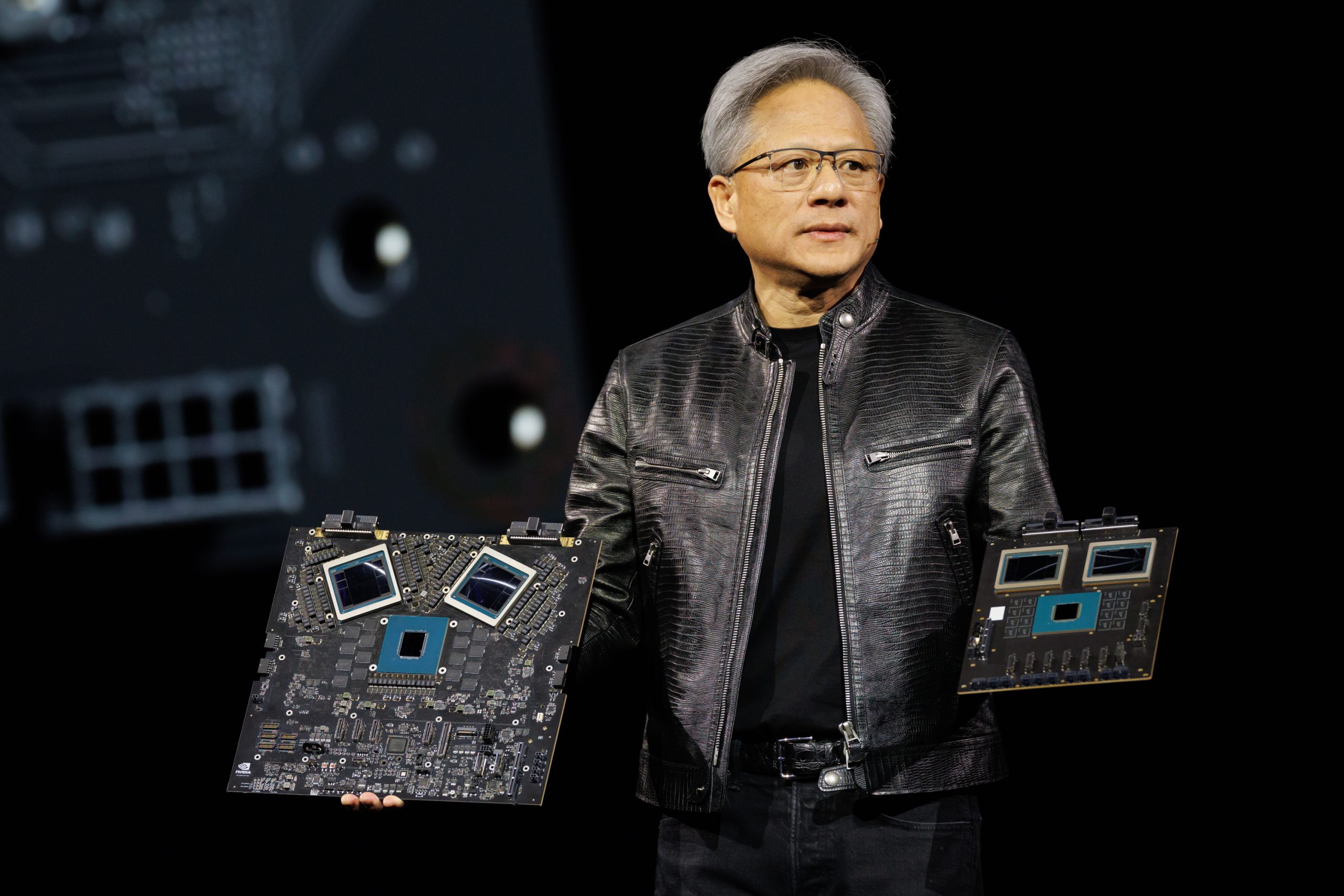
Shares of Nvidia edged lower in early trading following CEO Jensen Huang’s keynote at the company’s developer conference, as investors remained unconvinced the event would reignite the stock’s rally.
Nvidia shares were down 0.4% at $182.42 after gaining just 1.7% in the previous session.
The muted reaction continues a pattern seen in recent conferences.
After the October 2025 GTC event, the stock fell 2% the following day, while earlier events in March 2025 and March 2024 had triggered gains of just over 3%.
Buy Nvidia stock instantly on eToro now.
Stock stuck in range amid macro pressures
Nvidia’s shares have largely traded within a narrow $180–$190 range since the past few months, reflecting growing investor caution.
Initial concerns about the sustainability of spending on artificial intelligence infrastructure, which emerged late last year, have been compounded by broader macroeconomic worries.
These include geopolitical tensions tied to the Iran conflict, reduced expectations for interest rate cuts and rising fears of a potential recession.
The backdrop has made it difficult for even strong corporate developments to drive meaningful upside in the stock.
Wall Street remains bullish on Nvidia stock
Despite near-term stock stagnation, Wall Street firms continue to express confidence in Nvidia’s long-term outlook.
Rosenblatt Securities said Nvidia now has visibility into $1 trillion in cumulative AI-related revenue between 2025 and 2027, highlighting the company’s scale and technological leadership.
The firm also pointed to Nvidia’s CUDA software ecosystem and its multi-pronged approach to inference as key competitive advantages.
Meanwhile, UBS reiterated a Buy rating and a $245 price target, identifying inference, infrastructure and robotics as major growth drivers.
UBS noted that product announcements were largely in line with expectations, though it highlighted a more bullish tone around Nvidia’s central processing unit ambitions.
$1 trillion AI revenue outlook
The headline announcement from the Nvidia GTC event was a significant upgrade to Nvidia’s revenue outlook tied to its next-generation AI chips.
Huang said the company expects to generate at least $1 trillion in cumulative revenue from its Blackwell and Rubin chip platforms between 2025 and 2027.
That marks a sharp increase from a prior estimate of $500 billion through 2026.
Importantly, Nvidia clarified that the forecast applies only to Blackwell and Rubin processors, suggesting that total data centre revenue — including other products — could exceed Wall Street expectations of roughly $1 trillion over the same period.
Analysts see validation, not upside surprise
Despite the upgraded outlook, analysts said the announcement largely confirmed existing expectations rather than materially raising forecasts.
Stifel analyst Ruben Roy wrote that the updated backlog “validated rather than raised current estimates.”
Roy reiterated a Buy rating and set a $250 price target, based on a price-to-earnings multiple of 25 times his projected 2027 earnings.
Nvidia currently trades at less than 22 times forward earnings, according to FactSet data.
Focus shifts to AI inference
A key theme from the conference was Nvidia’s push into inference — the process of generating outputs from trained AI models.
The company unveiled a new system designed for inference workloads, combining its next-generation Vera Rubin servers with specialised chips from Groq.
The system integrates 72 Vera Rubin servers with 256 language processing units (LPUs), aimed at delivering low-latency, high-throughput performance for large-scale AI models.
Nvidia said it remains on track to ship Vera Rubin systems in the second half of 2026.
The move is intended to address growing competition from alternative chip architectures optimised for inference, including Alphabet’s tensor processing units developed in collaboration with Broadcom.
The post Nvidia stock fails to rally after Huang’s speech but analysts remain bullish appeared first on Invezz